



Professor of Statistical Science, Deputy Head of Department
Biographical Sketch
I received my PhD in Statistics from the University of Washington in 2011, and was a Postdoctoral Research Fellow at the Statistical Laboratory in Cambridge from 2011 to 2013.
Research Interests
My research is in understanding how multivariate statistical models – such as Bayesian network models, marginal models and latent variable models – can be used to learn about the world around us. In addition, I am interested in how these methods can be applied to epidemiology, medicine and the social sciences.
This work has led in various directions: finding implications of models that can be tested in data, and showing that no further constraints exist; determining whether quantities of scientific interest are identifiable; understanding when marginal models can be properly specified, simulated from, and fitted; and understanding when efficient model selection is possible. A particular area of interest recently has been simulating from marginal causal models, and applications to combining evidence from different types of study.
I am also interested in the mathematical and statistical properties of more general latent variable models, conditional independence, and model parametrizations.
Publications
Contact Details
College affiliation: Tutorial Fellow at Jesus College
Email: evans@stats.ox.ac.uk
Office: 1.01
Graduate Students
Related News
Related News

Recent Research Highlights


News & Events


A global hub for outstanding statistics research, teaching and advice
Research Groups
We feel enormous pride in the quality and the diversity of our research. In the Research Excellence Framework (REF) 2021, research from the Mathematical Institute and the Department of Statistics in Oxford was submitted together under Unit of Assessment 10. Overall, 78% of our submission was judged to be 4* (the highest score available, for research quality that is world-leading in terms of originality, significance, and rigour).

Statistical Theory and Methodology
The Statistical Theory and Methodology group develops novel underpinnings for statistical practice, and implements them in new methods.

Statistical Genetics and Epidemiology
The group carries out a broad range of computational biology research including Genetics, Genomics and Epidemiology. The research is both theoretical and applied, generating both new methods and genetic and epidemiological insights as well as computational tools and software.

Probability
The Probability Group in the Statistics Department carries out research in random graphs and networks, random trees, branching processes, Lévy processes, interacting particle systems, queueing processes, models from statistical mechanics, coalescent processes and random walks.
Oxford Protein Informatics Group
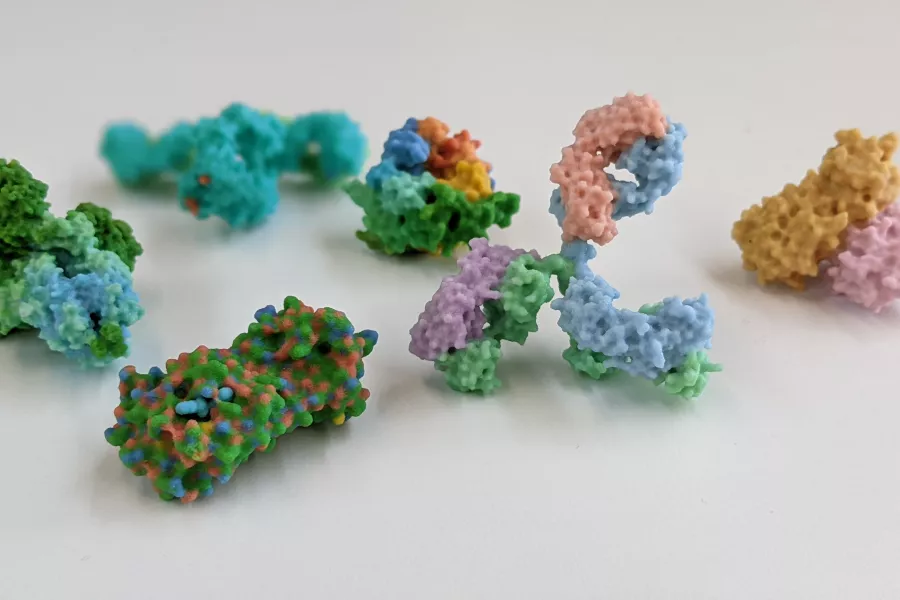
The Oxford Protein Informatics Group (OPIG) is an interdisciplinary group that works across the boundaries of statistics and computation and biology and medicine. We investigate both proteins and small molecules. Collaborating with academic and industrial partners, we develop cutting-edge computational methods that use the latest experimental data to yield valuable insights into immunology, in silico drug design, and protein folding.

Econometrics and Population Statistics
The group creates and analyses algorithms that extract insights from complex datasets in economics, finance, population health, and ecology. Our novel methods for finance, population behaviour, and biological mechanisms overcome limitations of traditional statistical methods from unobserved confounders and uncertain models.

Computational Statistics and Machine Learning
Our research spans the whole range of modern computational statistics and machine learning with particular strengths in probabilistic modelling, nonparametric methods, Monte Carlo, variational inference, deep learning, and applications in genetics, genomics and medicine.

Computational Biology and Bioinformatics
The analysis of biological data such as DNA sequences, gene expression arrays and single cell data can reveal new insights into intracellular mechanisms as well as evolutionary processes. This research group develops computational and statistical methods for the analysis of such data, with particular emphasis on methods for biological networks and biological sequences.
Teaching & Collaboration
We are proud of the quality of our teaching, providing a robust background in probability and statistics to our students. Our consultancy service provides quality advice and analysis to clients, and our collaboration with industry continues to grow.
Study with us
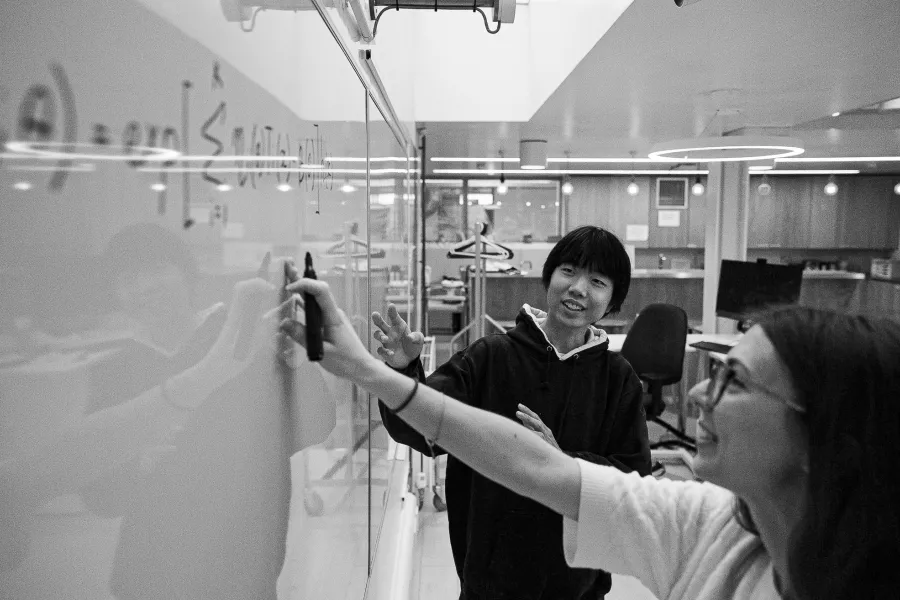
Statistics is the ultimate transferable skill that can unlock answers to a wide range of questions. The discipline requires a core mathematical ability combined with a judicious view of problems and situations. Our rigorous teaching will give you the foundations to use statistics to solve real world problems in a wide range of fields.
Statistical Consultancy
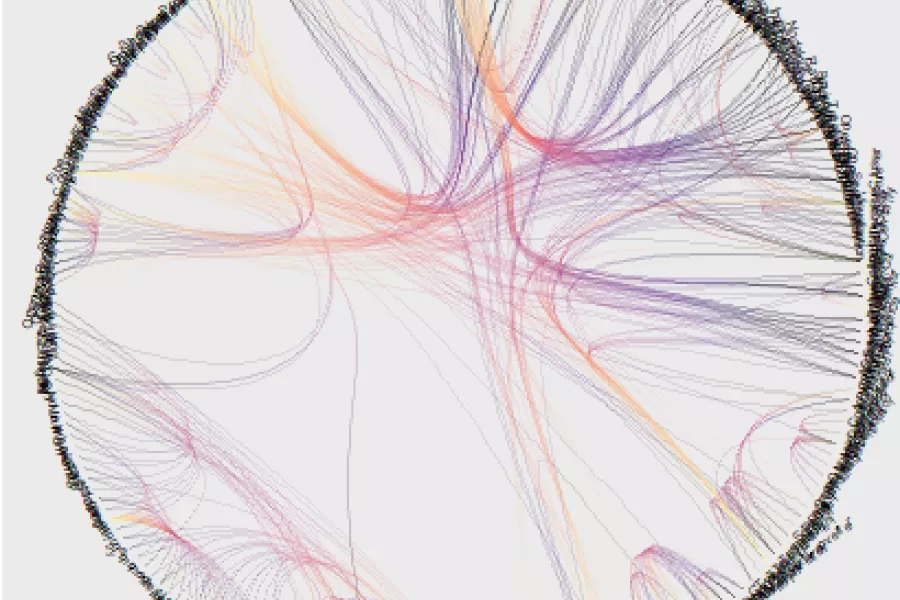
Oxford University Statistical Consulting (OxUSC) is a source of statistical advice and expertise for clients from businesses and organisations and for researchers and staff at the University of Oxford. We work closely with our clients across disciplines and sectors to answer questions relating to study design, data collection, analysis and visualisation of results. We also offer statistical training tailored to your context and needs.
Industry
The Department of Statistics has an established history of working with industry across research collaborations and studentships. We welcome new industrial partnerships and are always willing to discuss new opportunities to connect.