


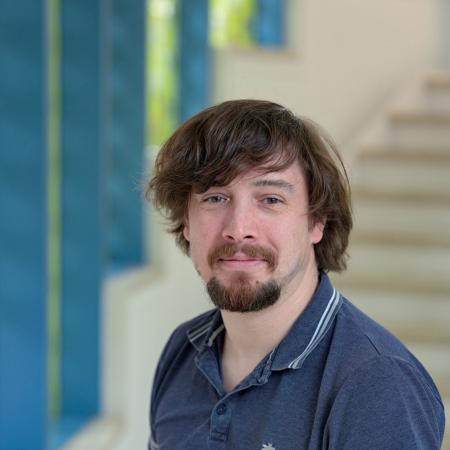
Dr Chris Taylor

Research Software Engineer

About Me

Chris Taylor completed an MSci in Chemistry at the University of Bristol in 2010, and stayed on to achieve a Ph.D in Theoretical Chemistry in 2014 under the supervision of Prof. Fred Manby.  He subsequently took up a series of postdoctoral research roles with Prof. Graeme Day at the University of Southampton, undertaking over a decade of research in the field of organic molecular crystal structure prediction. 

Since 2025, he holds the position of Research Software Engineer in the Department of Statistics, working with Prof. Charlotte Deane and the Oxford Protein Informatics Group to develop, deploy, and maintain software tools to assist the discovery, simulation, and understanding of antibodies and small molecules for therapeutics.

Research Interests

Beyond his software engineering activities within OPIG, his research interests lie in computational chemistry method development and application, simulation of intermolecular interactions, and in silico prediction and discovery of novel molecules and materials.

Publications

Contact Details

Email: christopher.taylor@stats.ox.ac.uk

Office:

Pronouns: He/Him
Research Groups

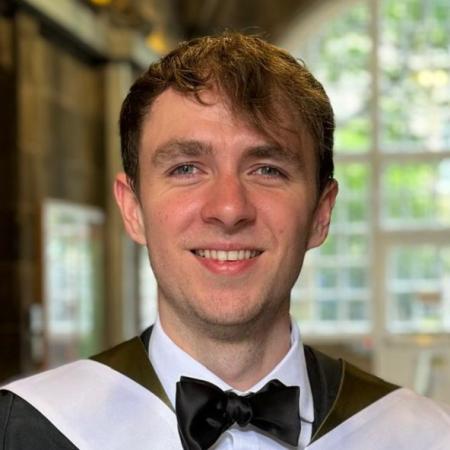
Nicholas Runcie

DPhil in Statistics student

About Me

I completed my Integrated Master's (MChem) in Medicinal and Biological Chemistry at the University of Edinburgh. In my final year, I worked at AstraZeneca in oncology computational chemistry, contributing to small molecule drug discovery projects. There, I gained experience developing and applying AI methods to support drug discovery efforts.

Research Interests

My research focuses on developing artificial intelligence methods for small molecule drug discovery. The ultimate aim is to create tools that accelerate the discovery and development of novel medicines, addressing unmet medical needs more efficiently, cost-effectively, and with improved outcomes.

Currently, my research is centered around the application of large language models (such as ChatGPT, Claude, Gemini, etc.) in chemistry. I investigate whether these models truly "understand" chemistry and their potential to significantly aid scientific discovery. In particular, I am exploring how these models can leverage chemical theory to generate new hypotheses, design experiments, and interpret experimental results.

My first preprint as part of the Oxford Protein Informatics Group (OPIG) examines the ability of the latest large language models (known as reasoning models) to interpret molecular structures. Our findings demonstrate that these models can successfully perform highly complex chemistry tasks.

Selected publications:

Contact Details

Email: runcie@stats.ox.ac.uk

Office: 2.11

Pronouns: He/Him

Subscribe to