
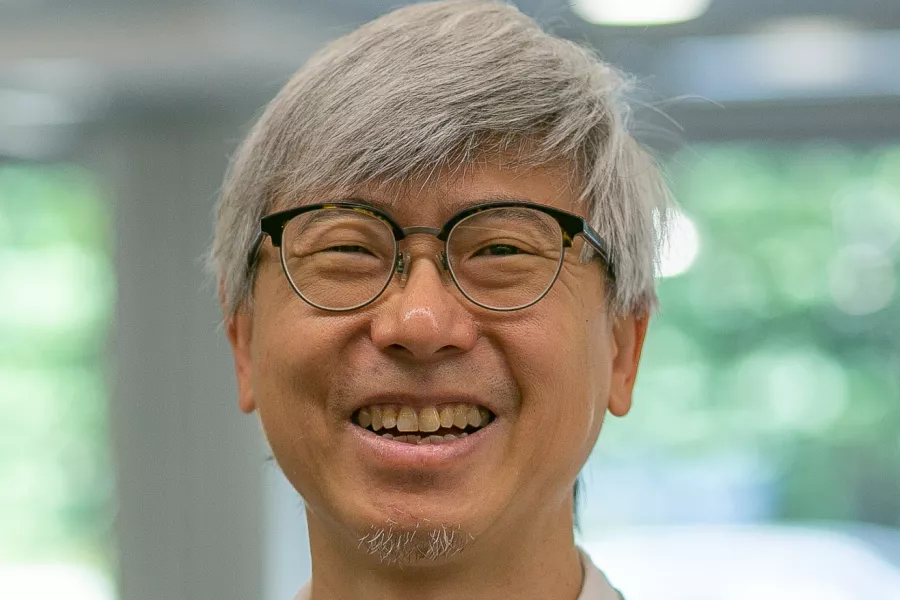
Along with a group of machine learning and artificial intelligence (AI) experts from industry and academia and representatives from international non-governmental organisations (NGOs), the Department of Statistics’s Prof. Yee Whye Teh was involved in releasing the Dagstuhl Declaration to guide future collaborations between AI experts and NGOs.
The Dagstuhl Declaration [link: https://www.dagstuhl.de/fileadmin/redaktion/Programm/Seminar/19082/Declaration/Declaration.pdf] builds on guidelines and principles such as the Toronto Declaration and the United Nations Sustainable Development Goals (SDGs) to call on those working on AI for Social Good projects to understand the potential discrimination against, and vulnerabilities of, the users, beneficiaries, and of the people potentially affected by such technologies. Signatories to the declaration commit to the following recommendations to help future collaborations working on the social good.
1) Operating within a just and fair ethical framework that respects human rights standards and law.
2) Striving for AI projects to be built on accessible technology.
3) Striving for AI projects to be deployable across various settings and communities.
4) Encouraging best practices in the collection of data.
5) Fostering deep collaboration and partnership between the AI and NGO communities.
Prof. Yee Whye Teh says that ML and AI technologies are driving major shifts in how society operates, and there is tremendous potential for using these technologies for social good. The declaration sets out a solid foundation to build a community around AI for social good, by giving guidelines to encourage long-term sustainability of collaborations between NGOs and AI experts and to ensure that the technology is accessible to all across linguistic, cultural, and financial boundaries. It is important that we all work hard to ensure that ML and AI technologies are part of the solution and not part of the problem.
Gerald Abila from Barefoot Law in Uganda says there’s massive potential in AI technology for the type of problems that he’s tackling on a day to day basis. But he really hopes that AI experts will always collaborate with social good experts when designing this technology. “Nothing about us, without us!”
The declaration grew out of the AI for Social Good Dagstuhl seminar [link: https://www.dagstuhl.de/en/program/calendar/semhp/?semnr=19082] hosted at the Leibniz Center for Informatics where 24 people from 9 countries on 3 continents convened for a week in February to discuss pressing issues for NGOs, and participate in a hackathon.
It has already been signed by leaders from the machine learning and non-profit communities. More signatories are expected in the weeks to come. Do you want to be part of the AI for Social Good community? Sign up to the declaration at https://aiforthesocialgood.com/.
Applications for postgraduate study are now open for 2027–28 entry
Postgraduate study at Oxford Statistics offers the chance to work across a broad range of research, from statistical theory and methodology, probability and machine learning to applications in areas including genetics, epidemiology, computational biology, finance and the social sciences.
Tom Rainforth awarded full Professorial title
Tom Rainforth has been awarded the title of Professor of Statistical Machine Learning and, as of 1 September 2026, is also a Fellow of Jesus College.
What does a statistician do for the England football team?
From squad selection to modelling how footballs behave at altitude, statistician Matt Penn explains how data is helping shape the modern game, and why coaches will always matter more than the numbers.