
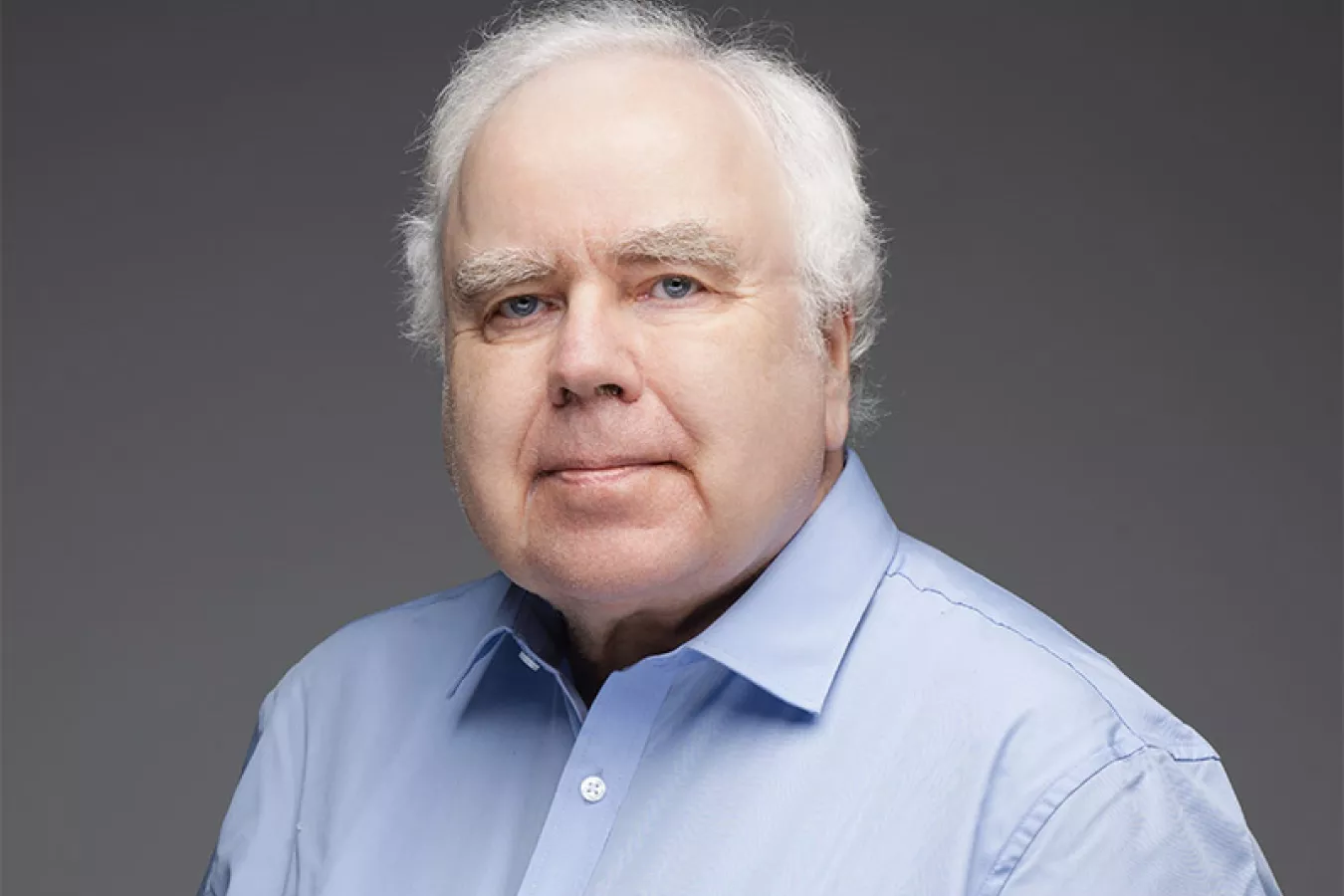
Professor Brian Ripley, Emeritus Professor of Applied Statistics and former Head of the Department of Statistics at the University of Oxford, has been named as one of five laureates of the 2026 Rousseeuw Prize for Statistics.
Awarded every two years by the King Baudouin Foundation, the Rousseeuw Prize recognises major contributions to statistical research and their impact on society. This year's award honours the international R Core Team, which has overseen the development of R since the 1990s and helped establish it as one of the world's most widely used platforms for statistical computing and data analysis.
The other laureates are Professor Martin Maechler (ETH Zürich), Professor Kurt Hornik (Vienna University of Economics and Business), Professor Peter Dalgaard (Copenhagen Business School), and Professor Luke Tierney (University of Iowa).
Professor Ripley said: ‘Statistical computing has for many years been undervalued, so it is gratifying to see it recognised in this way, and especially the appreciation of what has been an altruistic endeavour: making the platform available to all and keeping it available.’
Originally developed as a free and open-source alternative to commercial statistical software, R has become the world's leading platforms for statistical computing and data analysis, supporting applications ranging from clinical trials and disease surveillance to financial risk assessment and public policy.
Through the Comprehensive R Archive Network (CRAN), researchers can freely share software and methods, helping innovations spread rapidly throughout the statistical community. The archive now hosts more than 23,000 contributed packages spanning fields from bioinformatics and spatial statistics to machine learning and text analysis.
Organisations including the US Food and Drug Administration and the Bank of England rely on R, alongside universities, healthcare providers and news organisations around the world.
Professor Ripley joined the R Core Team in its early years and has contributed to the development and maintenance of the software for more than two decades. His work has helped ensure that R remains robust, portable and accessible across a wide range of computing environments.
Professor Frank Windmeijer, Head of the Department of Statistics, said: ‘Few developments have had a greater impact on modern statistics than the emergence of R as a common platform for statistical computing. Brian's long-standing contribution to the project has helped shape the way statistical methods are developed, shared and applied around the world.’
Professor Ripley added: ‘One of the things I am particularly proud of is the inclusivity of the project. The aim has always been to make state-of-the-art statistical methods available to everyone.’
The Rousseeuw Prize for Statistics recognises innovations that have transformed the understanding and application of data for the benefit of society. Previous recipients have been recognised for work in areas including causal inference in medicine and epidemiology, and methods for controlling false discoveries in large datasets.
The award ceremony for the Rousseeuw Prize recipients will take place in Leuven, Belgium, in November.
Applications for postgraduate study are now open for 2027–28 entry
Postgraduate study at Oxford Statistics offers the chance to work across a broad range of research, from statistical theory and methodology, probability and machine learning to applications in areas including genetics, epidemiology, computational biology, finance and the social sciences.
Tom Rainforth awarded full Professorial title
Tom Rainforth has been awarded the title of Professor of Statistical Machine Learning and, as of 1 September 2026, is also a Fellow of Jesus College.
What does a statistician do for the England football team?
From squad selection to modelling how footballs behave at altitude, statistician Matt Penn explains how data is helping shape the modern game, and why coaches will always matter more than the numbers.