
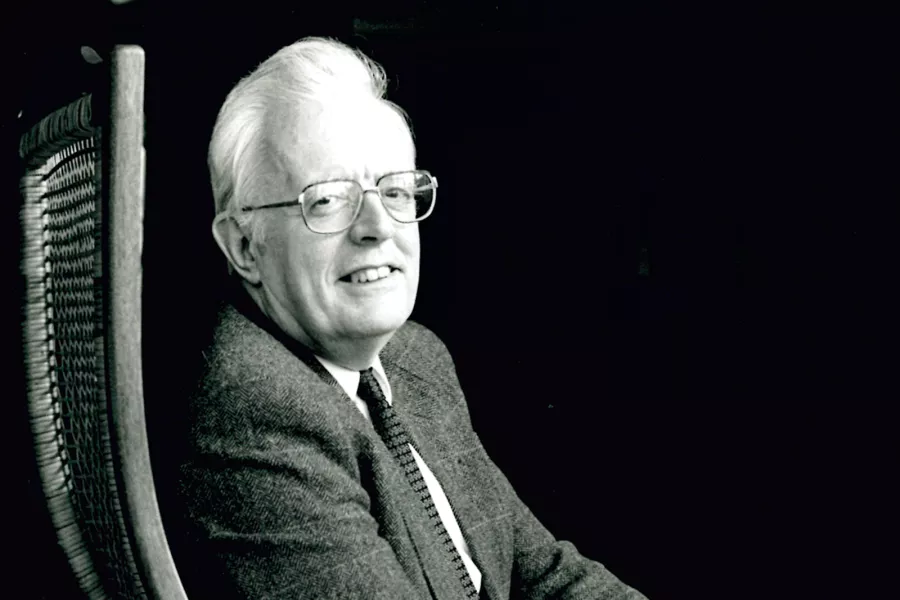
We continue to remember our former colleague Sir David Cox (1924-2022), frequently thinking about what he would say or making use of his many ground-breaking statistical advances.
Sir David Cox’s Legacy
The Cox Proportional Hazards Model, which – with David being David, he never named it after himself, continues to be widely used to identify risk factors that increase or decrease the risk of ‘survival’ in many settings well beyond the field of medicine. Similarly, the work of the generations of statisticians he taught, mentored, and collaborated with contributes to more areas of scientific and social-scientific discovery than we could possibly list. Thus, his legacy continues to grow.
In the Department of Statistics we are looking for ways to commemorate David in perpetuity with an ultimate goal of endowing a professorship in his name. Other initiatives include support for DPhil students, which may range from travel funds to facilitate collaboration and conference attendance, right through to direct studentship support.
How to Donate
To find out more about contributing to the Sir David Cox Memorial fund, please see here, or to go straight to our Giving to Statistics page, please click here.
Photo of Sir David Cox taken by Jane Brown, provided by Nuffield College.
Applications for postgraduate study are now open for 2027–28 entry
Postgraduate study at Oxford Statistics offers the chance to work across a broad range of research, from statistical theory and methodology, probability and machine learning to applications in areas including genetics, epidemiology, computational biology, finance and the social sciences.
Tom Rainforth awarded full Professorial title
Tom Rainforth has been awarded the title of Professor of Statistical Machine Learning and, as of 1 September 2026, is also a Fellow of Jesus College.
What does a statistician do for the England football team?
From squad selection to modelling how footballs behave at altitude, statistician Matt Penn explains how data is helping shape the modern game, and why coaches will always matter more than the numbers.