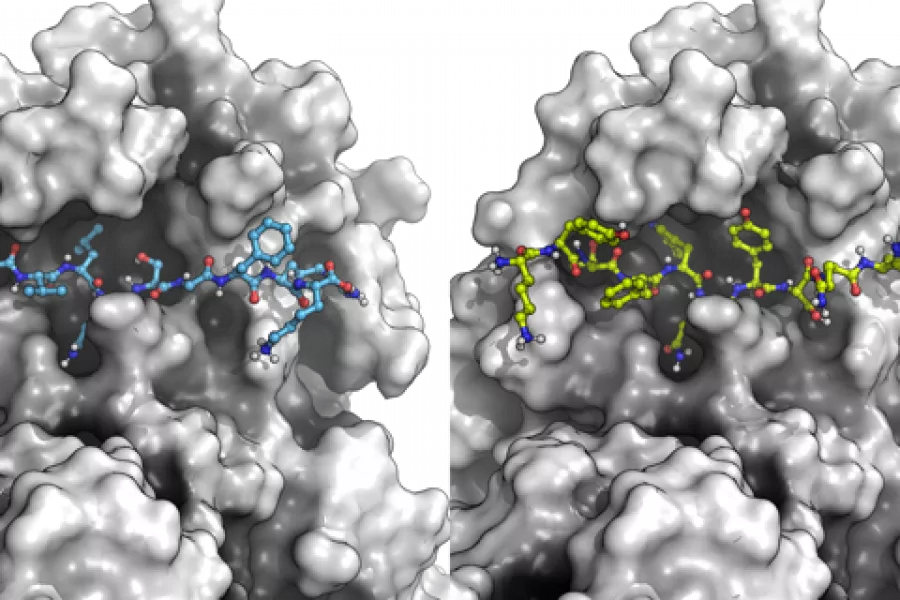
In March 2020, the World Health Organization declared a global COVID-19 pandemic and the UK announced a strict national lockdown. When Oxford University scientists were sent home, they rolled up their sleeves, switched on their computers and started to help develop new drugs to target SARS-CoV-2, the virus that causes COVID-19.
It began with a small group of scientists and their graduate students at the University of Oxford, who were joined by colleagues from Bristol University, Diamond Light Source and academics in France, Italy, and Spain – all working from home but coming together weekly on Zoom to tackle this terrifying disease.
Thus began an international collaboration involving 29 scientists around the world focused on understanding how SARS-COV-2 makes its worker proteins at the molecular level so we could develop novel antiviral drugs and block their production. Read the full story.
Applications for postgraduate study are now open for 2027–28 entry
Postgraduate study at Oxford Statistics offers the chance to work across a broad range of research, from statistical theory and methodology, probability and machine learning to applications in areas including genetics, epidemiology, computational biology, finance and the social sciences.
Tom Rainforth awarded full Professorial title
Tom Rainforth has been awarded the title of Professor of Statistical Machine Learning and, as of 1 September 2026, is also a Fellow of Jesus College.
What does a statistician do for the England football team?
From squad selection to modelling how footballs behave at altitude, statistician Matt Penn explains how data is helping shape the modern game, and why coaches will always matter more than the numbers.