
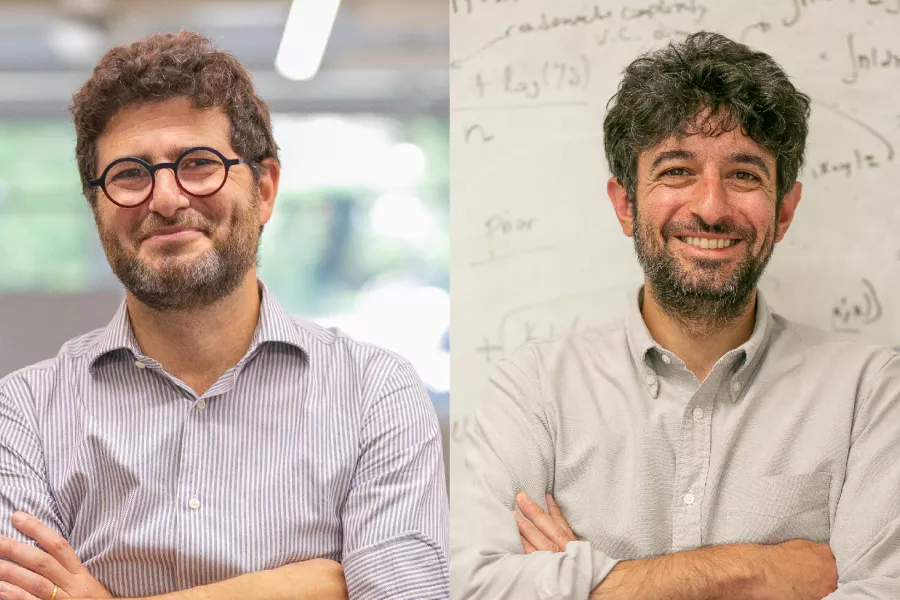
We are delighted to announce that two of our academics have been awarded the title of Full Professor through the university’s Recognition of Distinction exercise this year, in recognition of their achievements in research, teaching and good citizenship. They are:
- Professor George Deligiannidis – Professor of Statistics.
- Professor Julien Berestycki – Professor of Probability.
Congratulations! We’re very happy for you and this recognition.
Recognition of Distinction
The Recognition of Distinction scheme is run by the University of Oxford every year and is open to staff at Associate Professor grades or - when part of Gardens, Libraries and Museums (GLAM), who are Keepers. All staff employed by the University of Oxford in an academic or senior research roles are eligible to apply.
For more information on the different recognition schemes available at the Oxford University, please visit: https://hr.admin.ox.ac.uk/recognition-procedures
Applications for postgraduate study are now open for 2027–28 entry
Postgraduate study at Oxford Statistics offers the chance to work across a broad range of research, from statistical theory and methodology, probability and machine learning to applications in areas including genetics, epidemiology, computational biology, finance and the social sciences.
Tom Rainforth awarded full Professorial title
Tom Rainforth has been awarded the title of Professor of Statistical Machine Learning and, as of 1 September 2026, is also a Fellow of Jesus College.
What does a statistician do for the England football team?
From squad selection to modelling how footballs behave at altitude, statistician Matt Penn explains how data is helping shape the modern game, and why coaches will always matter more than the numbers.