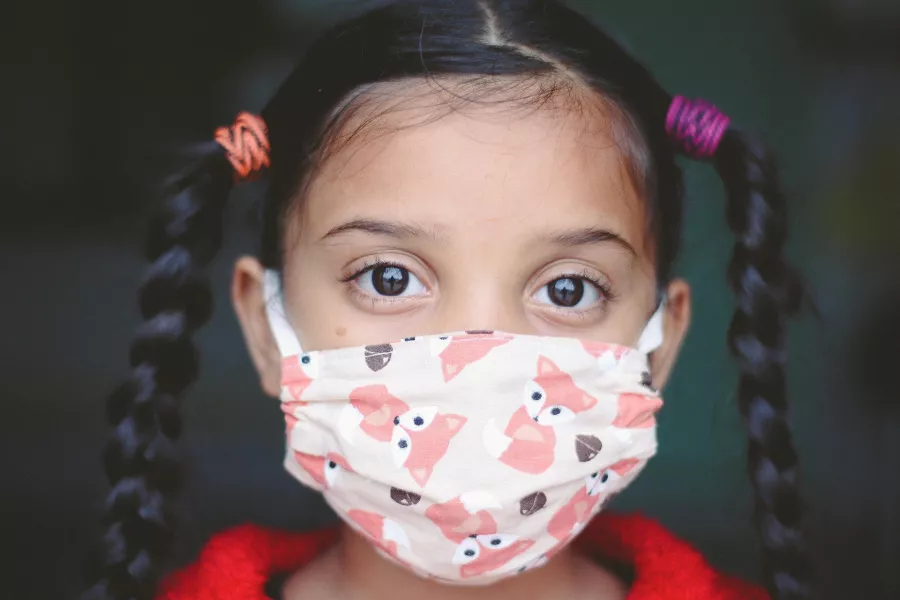
An international team has come together to assess the impact of COVID-19 deaths of parents or caregivers on children. The team includes Professor Christl Donnelly, and the results of their work is published in the Lancet.
Modelling done by the group estimates that there are already more than one million orphans, 1.8 million children have lost a caregiver, and these numbers are rising. Professor Donnelly explains, ‘This is a call to action to support children who have lost loved ones. Our calculations can help policymakers turn good intentions into appropriately scaled help where it is needed most.’
You can read more about the work on the University's Science Blog.
Applications for postgraduate study are now open for 2027–28 entry
Postgraduate study at Oxford Statistics offers the chance to work across a broad range of research, from statistical theory and methodology, probability and machine learning to applications in areas including genetics, epidemiology, computational biology, finance and the social sciences.
Tom Rainforth awarded full Professorial title
Tom Rainforth has been awarded the title of Professor of Statistical Machine Learning and, as of 1 September 2026, is also a Fellow of Jesus College.
What does a statistician do for the England football team?
From squad selection to modelling how footballs behave at altitude, statistician Matt Penn explains how data is helping shape the modern game, and why coaches will always matter more than the numbers.