


Postdoctoral Researcher
About Me
I studied mathematics as an undergraduate, before focusing my doctoral research on population genetics – where we use probabilistic models to help us understand how population movements and selective pressures gave rise to modern-day human genetic variation.
Since then, I’ve developed a general passion for the process of discovery in biomedical science. How can we best design scientific experiments and update our beliefs, based on the resulting data, to help improve public health? Our essential common goal is to investigate and refine scientific hypotheses about the mechanisms of disease, through careful experimentation and observation, followed up by robust, reproducible analyses.
Research Interests
We as statisticians contribute to science by developing statistical models that probabilistically relate data to underlying mechanisms of interest. Methodological tools such as Bayesian networks and Markov chain Monte Carlo allow us to work with arbitrarily complex statistical models. We strive to design and fit models that satisfactorily represent the mechanisms through which data arise.
Modern scientific datasets are often large, highly structured, and multifaceted. They span multiple high-dimensional data types (such as genetic, molecular, clinical, image or audio data), are gathered sequentially and/or spread spatially, can be affected by selection bias and harbour missing data. Such large, multimodal, complex datasets present challenges as well as opportunities. While we are theoretically capable of modelling all data types and generating mechanisms in an all-encompassing model, high computational complexity may mean it is infeasible in practice to fit our model in reasonable time. I’m interested in statistical methods that help us perform inference in this setting, in ways that are computationally efficient yet still probabilistically coherent. Here are some example themes and applications of current focus:
Multivariate methods. Effective modelling of multivariate relationships in high dimensional data can often provide transformative insights. We are developing composable multivariate models, based on sparse factor representations, to extract information from high dimensional phenotypic measurements with missing data.
Longitudinal data analysis. We are developing methods for multivariate longitudinal analysis of clinical trials data, whereby we can harness information both across clinical endpoints and across time points of an individual patient. We are also interested in inferring longitudinal trajectories from infrequently measured phenotypes in UK biobank data. We recently implemented a susceptible-infectious-recovered (SIR) to model changes in local Covid prevalence over time.
Composable inference. We’re interested in developing composable statistical methods that allow us to extract information from diverse datasets separately and conveniently, and then to synthesise information coherently and pragmatically (e.g., Markov melding). We have employed composable statistical inference in application areas ranging from UK biobank, randomised clinical trials, multivariate phenotyping, and Covid testing data.
Inference under model misspecification. When combining information from multiple data sources, we may want to control the influence of less reliable or poorly modelled sources (e.g., generalised Bayesian inference). I’m interested in computationally efficient ways of doing this. We used this form of inference to obtain unbiased local Covid prevalence estimates: we combined highly accurate randomised testing surveys (REACT) with precise but inaccurate symptoms-ascertained data (Test-and-trace).
Publications

Related News
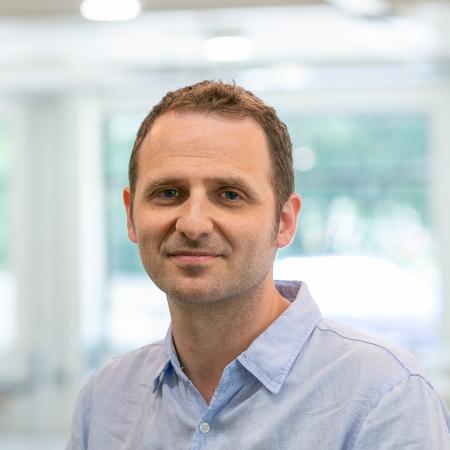
Professor of Statistical Genomics
Biographical Sketch
I received my PhD in computer science from Columbia University in 2014. I then spent three and a half years working on statistical and population genetics as a postdoctoral fellow at the Harvard Chan School of Public Health, and at the Broad Institute of MIT and Harvard. Prior to that, I obtained a bachelor’s and a master’s degree from Rome’s Sapienza University, and a master’s degree from Columbia University, all in computer science with a focus on artificial intelligence, machine learning, and cognitive robotics.
Research Interests
My research is at the intersection of statistics, computer science, and genetics. I develop methods to enable new types of analyses in statistical and population genetics, with a particular interest in problems that involve modeling and inference in large datasets. Specific areas of research include studying evolutionary parameters in the human genome (natural selection, mutation/recombination rates), reconstructing past demographic events using genetic data (migration, expansion/contraction of populations), studying the heritability and genetic architecture of complex traits (nature vs nurture), and detecting disease-causing variation in the human genome.
Publications
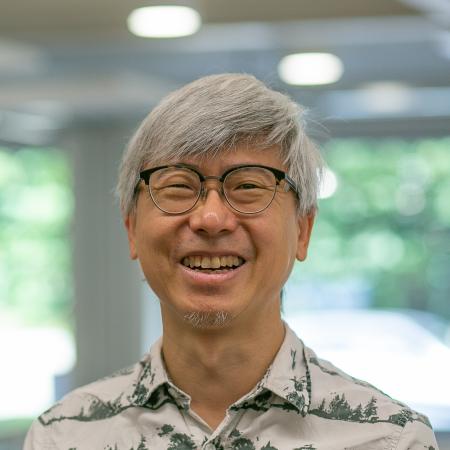
Professor of Statistical Machine Learning
Biographical Sketch
Prior to joining Oxford, I was a Lecturer then Reader of Computational Statistics and Machine Learning at the Gatsby Neuroscience Unit, UCL from 2007 to 2012. I obtained my PhD in Computer Science at the University of Toronto in 2003. This was followed by two years as a postdoctoral fellow at University of California, Berkeley, then as Lee Kuan Yew Postdoctoral Fellow at the National University of Singapore.
Research Interests
My research interests lie in the general areas of machine learning, Bayesian statistics and computational statistics. Although my group works on a variety of topics ranging from theoretical, through to methodological and applications, I am personally particularly interested in three (overlapping) themes: Bayesian nonparametrics and probabilistic learning, large scale machine learning, and deep learning.
These themes are motivated by the phenomenal growth in the quantity, diversity and heterogeneity of data now available. The analysis of such data is crucial to opening doors to new scientific frontiers and future economic growth. In the longer term, the development of general methods that can deal with such data are important testing grounds for artificial general intelligence systems.
Publications
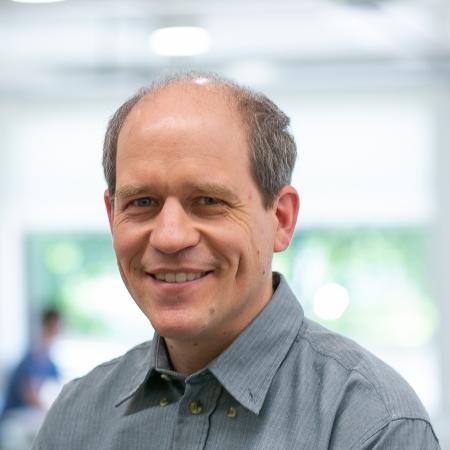
Associate Professor of Probability
Bio
I studied in Münster and Manchester before doing my Ph.D. at the University of Paris 6 (now Sorbonne Université) under the supervision of Jean Bertoin. After a one-year pre- and post-doctoral stay in Aarhus working with Ole Barndorff-Nielsen, I joined the Department of Statistics at Oxford in April 2002.
Research Interests
- Discrete and continuum random trees and forests, branching processes, superprocesses, tree-valued random processes
-
Exchangeability, random partitions, compositions, random hierarchies, interval partitions
-
Lévy processes, subordinators, time changes
Publications
Contact Details
College affiliation: Supernumerary Fellow at Brasenose College
Email: winkel@stats.ox.ac.uk
Office: 3.12
Research Groups
Associate Professor of Statistics
Biographical Sketch
I moved to Oxford from Queen’s University in Kingston, Ontario, where I was Associate Professor in the Department of Mathematics and Statistics. Before then I was a postdoc at UC Berkeley for six and a half years, in the Departments of Demography and Statistics, following stints at the Technical University of Delft and the Technical University of Berlin. I completed my PhD in probability theory in the Harvard University Department of Mathematics in 1996, working with Persi Diaconis.
Research Interests
- Stochastic processes
- Random dynamical systems
- Biodemography
- Survival analysis
- Human sex ratio
- Markov chain Monte Carlo
I am currently interested primarily in biological and demographic questions connected with ageing and mortality. I have been working on improving the probability-theory machinery that underlies some theoretical analyses of the evolution of ageing, and developing statistical methods that help to bring together experiments with these theories. This has largely been in the area of survival analysis, but I have also increasingly been concerned with Bayesian methods for analysing longitudinal data. My demographic interests have branched out to include the human sex ratio and genetic determinants of human life history traits.
I continue to work on fundamental questions of stochastic processes, in particular the behaviour of stochastic flows, the asymptotics of killed Markov processes, and the growth rates of populations dynamics in random environments.
Publications
Contact Details
College affiliation: Tutorial Fellow at Worcester College
Office: 3.01
Students

Professor of Statistics
Biographical Sketch
- Research Professor, Department of Statistics, Oxford (2014 - present)
- University Lecturer, Department of Statistics, Oxford, and Fellow at Keble College, Oxford (2000 – 2014)
- Senior Research Fellow, King’s College, Cambridge (1998 – 2000)
- Adjunct Assistant Professor, Department of Mathematics, UCLA, Los Angeles (1996 – 1998)
- Lecturer, Department of Mathematics, USC, Los Angeles (1994 – 1996)
- Ph.D. in Mathematics, University of Zurich, Title: A weak law of large numbers for empirical measures via Stein’s method. Advisor: Prof. A.D. Barbour, D.Phil (1994)
Research Interests
- Applied probability
- Computational biology
- Stein’s method
- Networks
- Word count statistics
Have you heard about the phenomenon that everyone is six handshakes away from the President? The six degrees of separation hypothesis relates to a model of social interactions that is phrased in terms of a network – individuals are nodes, and two individuals are linked if they know each other. Networks pop up in a variety of contexts, and recently much attention has been given to the randomness in such networks. My main research interest at the moment are network statistics to investigate such networks in a statistically rigorous fashion. Often this will require some approximation, and approximations in statistics are another of my research interests. It turns out that there is an excellent method to derive distances between the distributions of random quantities, namely Stein’s method, a method I have required some expertise in over the years. The general area of my research falls under the category Applied Probability and many of the problems and examples I study are from the area of Computational Biology (or bioinformatics, if you prefer that name).
Statistical Inference for Networks
Models for Protein-Protein Interaction Networks
Shortest Paths in Random Intersection Graphs
Steins Method and Stochastic Analysis of Rademacher Functionals
Statistics for Alignment-free Sequence Comparison
Statistical Inference for Networks
A Short Introduction to Steins Method
Publications