
Statistical Theory and Methodology
The Statistical Theory and Methodology group develops novel underpinnings for statistical practice, and implements them in new methods.




Research in the Department of Statistics at Oxford is distinctive both in its breadth and depth, spanning a wide range of areas from epidemiology to bioinformatics to statistical genetics and to machine learning and probability. We aim not only to build and maintain world-leading strength in our current core research areas, but also to develop expertise in emerging and important areas of statistical science that are currently less well represented in the Department. We are strongly interested in developing and reinforcing collaborations to maximize the impact of our research across Statistics, other academic disciplines, industry and society as a whole. We are also committed to improving the communication and reach of our research in the wider world.
We aim to foster a creative and collaborative culture where early researchers can thrive, with opportunities for networking and making connections both within the department and more widely.
We are very proud of the quality of our research. In the Research Excellence Framework (REF) 2021, research from the Mathematical Institute and the Department of Statistics in Oxford was submitted together under Unit of Assessment 10. Overall, 78% of our submission was judged to be 4* (the highest score available, for research quality that is world-leading in terms of originality, significance, and rigour).
The Statistical Theory and Methodology group develops novel underpinnings for statistical practice, and implements them in new methods.

The group carries out a broad range of computational biology research including Genetics, Genomics and Epidemiology. The research is both theoretical and applied, generating both new methods and genetic and epidemiological insights as well as computational tools and software.

The Probability Group in the Statistics Department carries out research in random graphs and networks, random trees, branching processes, Lévy processes, interacting particle systems, queueing processes, models from statistical mechanics, coalescent processes and random walks.
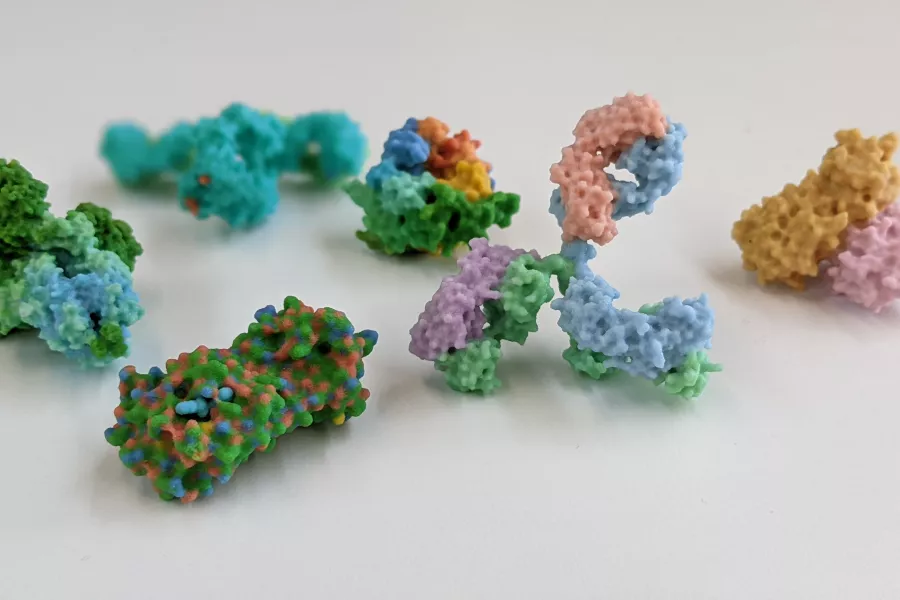
The Oxford Protein Informatics Group (OPIG) is an interdisciplinary group that works across the boundaries of statistics and computation and biology and medicine. We investigate both proteins and small molecules. Collaborating with academic and industrial partners, we develop cutting-edge computational methods that use the latest experimental data to yield valuable insights into immunology, in silico drug design, and protein folding.

The group carries out research in causal inference, in particular the identification and estimation of causal effects in situations where standard estimation techniques are invalid due to the presence of unobserved confounders.

Research in Statistical Machine Learning spans Bayesian probabilistic and optimization based learning of graphical models, nonparametric models and deep neural networks, and complements research in Monte Carlo methods for related classes of problems. Researchers in Statistical Methods develop very general statistical methodology.

The analysis of biological data such as DNA sequences, gene expression arrays and single cell data can reveal new insights into intracellular mechanisms as well as evolutionary processes. This research group develops computational and statistical methods for the analysis of such data, with particular emphasis on methods for biological networks and biological sequences.

A wide variety of reading groups take place in the department, contributing to academic life.